Respuesta rápida
A jazz bar is not a bar that plays jazz in the background. It is a format designed so that improvised music can actually be followed: a room facing the stage or the system, a calibrated volume, silence during the solos and an audience that understands that what is happening will not happen again.
If you want to get inside that code, start by understanding how the genre works and what is expected of you as a listener at an audio bar in Medellín.
Jazz is probably the genre that copes worst with noise. Not because it is fragile, but because its meaning lives in the detail: the saxophone breathing before a phrase, the brush grazing the snare, the exact moment the bass decides to change direction. If that gets lost, only the surface remains, and the surface is the least interesting thing jazz has.
That is why a specific format exists for listening to it. The jazz bar was born out of the need to give that music a space where it could be heard whole, with people seated, the volume measured and conversation in the background. This guide explains what makes a place work as a jazz bar, how to listen to what is happening and what to expect if it is your first time.
What makes a place a jazz bar
The difference is not in the programming, it is in the design. A venue can play jazz every night and still not work as a jazz bar if the audience cannot follow the music. There are four concrete conditions:
The room is oriented. The tables face the stage or the area where the system plays. There is no dance floor in the middle and no bar turning its back on the music. The layout communicates from the first second that this is a place to listen.
The volume sits below the shouting threshold. A well calibrated jazz bar plays at a level where you can talk quietly and still make out the cymbals. That is not a lack of power: it is a decision, because at high volume jazz loses its nuances faster than almost any other genre.
There is real acoustic treatment. Absorbing materials, irregular surfaces, no bare walls sending the sound back. Acoustic jazz has an enormous dynamic range, from a whisper to a hit, and a room that bounces flattens it.
The audience knows the code. Silence during the solos, applause when each one ends, conversation between sets. Nobody enforces that with signs: it spreads.
In live jazz you applaud when a musician finishes a solo, even if the tune keeps going. It is not an interruption: it is the signal that the audience is following the structure. Musicians expect it and use it to read the room. If it is your first time, let yourself be carried by the people already doing it.
How to listen to a solo without being a musician
The idea that you need theory to enjoy jazz is false, but it does help to know what is going on. The basic structure of almost any jazz tune is simple: the main theme is played, then each musician improvises in turn over the same chord progression, and at the end the theme returns. That is it.
With that in mind, listening becomes much easier:
- Pay attention to the opening theme. It is the melody you will recognize when it comes back at the end. Everything in between is built on that base.
- Follow one musician at a time. When the saxophone solo starts, do not try to hear everything: follow the saxophone and let the rest be context. Then repeat with the piano.
- Listen to the rhythm section. The drummer and the bassist react to what the soloist does in real time. That dialogue is what separates a great night from a mechanical one.
- Pay attention to silence. The best soloists leave gaps. What they do not play weighs as much as what they do.
- Accept getting lost. It is normal. Jazz has passages where the reference dissolves and then returns. That return is the best part.
Trio, quartet, quintet: why the lineup matters
The number of musicians on stage completely changes what you are going to hear, and it is the most useful piece of information for knowing whether a night will fit what you are looking for.
| Lineup | Who is on stage | What to expect |
|---|---|---|
| Trio | Piano, bass and drums | Maximum clarity, lots of space, intimate dialogue |
| Quartet | Trio plus a horn soloist | Balance between a strong melody and room to improvise |
| Quintet | Two horns plus rhythm section | More density, counterpoint between soloists, high energy |
| Duo | Two instruments, no drums | Very dynamic and fragile, demands real silence |
| Trio with vocals | Rhythm section plus a singer | Focus on lyrics and interpretation, more accessible |
If this is your first approach to live jazz, a quartet or a trio with vocals tend to be the most comfortable entry point: there is a clear melody to hold on to. If you already have some mileage, the piano trio and the duo are where the craft shows most.
The jam session: what it is and how to behave
The jam session is the liveliest format in jazz and also the most misunderstood. It is a space where musicians who do not necessarily play together get on stage to improvise over known repertoire, the so-called standards. There is no rehearsal, no closed set list and the result is genuinely unpredictable.
What to expect if you walk into one:
- Variable quality, and that is fine. There may be an extraordinary passage and ten minutes that go nowhere. That is the price of real improvisation.
- Rotating musicians. The lineup changes from tune to tune. Do not get attached to one.
- Recognizable standards. The repertoire leans on classic tunes because they are the common language that makes playing without rehearsal possible.
- Respect for the stage. The basic audience rule is the same: silence while they play, conversation between tunes.
A jam session is the best way to understand that jazz is a conversation, not a performance. What you are watching is people listening to each other and answering in real time.
What to drink and where to sit
Two practical details that change the night more than you would think.
The spot. In a jazz bar you do not want to be glued to the stage or to a speaker: the best point is usually a few meters back, centered, where the sound sources blend instead of hitting you from one side. If you book, ask for it.
The drink. Jazz goes especially well with drinks that do not demand attention: a spirit on ice, a classic cocktail meant to be sipped slowly, something you can leave on the table without ruining it. The idea is for the glass to accompany the listening, not compete with it.
A night of listening, with sound at the center
A high-fidelity system, an in-house curation and cocktails, in a room designed for music to be heard whole.
Reserva tu mesaMala: listening culture in El Poblado
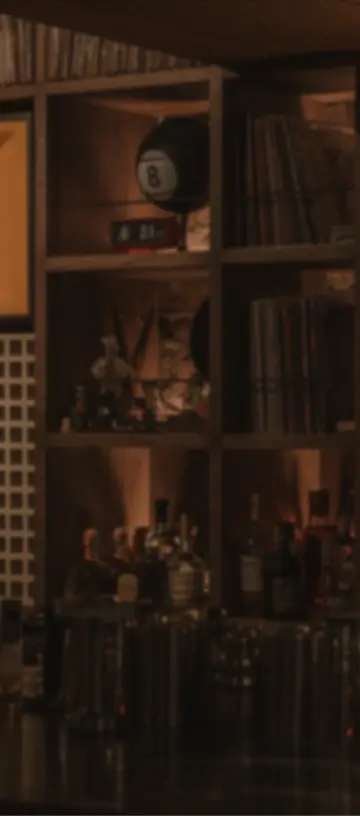
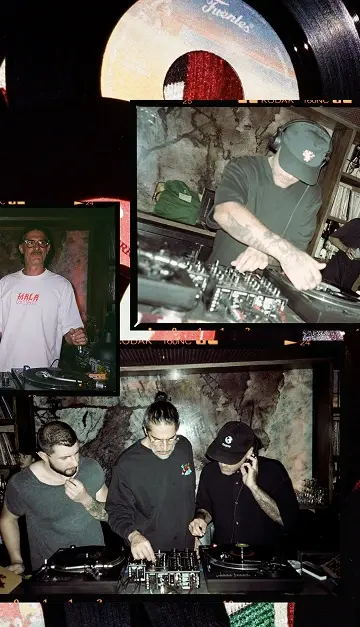
Mala is an audio bar in El Poblado, Medellin, and although its concept is not limited to jazz, it shares the same underlying principle as a jazz bar: the entire place is organized so that music can be heard properly. The room has seating oriented toward the system, the volume is calibrated so that conversation and music coexist, and the selection is built as a journey with intent, not as a continuous playlist.
For someone coming from jazz that translates into something concrete: you can follow the detail of a recording, tell the instruments apart and notice the decisions behind an interpretation. The cocktail program follows the same logic, supporting the night without stealing attention.
If you are looking for a real listening night in Medellin, secure your table and ask for it near the spot where the system sounds best.
Frequently asked questions
What exactly is a jazz bar?
It is a bar designed so that improvised music can genuinely be followed. You recognize it by four things: the room faces the stage or the sound system, the volume lets you hear detail without shouting, there is acoustic treatment that controls reflections, and the audience stays silent during the solos. It is not a bar that plays jazz in the background.
Do you need to know music to enjoy live jazz?
No. It is enough to know the basic structure: the main theme is played, each musician improvises in turn over the same chords and at the end the theme returns. With that you can follow one soloist at a time and hear how the rhythm section answers. The rest is learned by listening.
What is a jam session and what is expected of the audience?
It is an open session where musicians who have not rehearsed together improvise over known standards. The lineup changes from tune to tune and the quality is variable by nature. The audience is expected to do the same as on any jazz night: stay silent while they play, applaud at the end of each solo and talk between tunes.
Where can you listen to music with real audio quality in Medellin?
Mala is an audio bar in El Poblado built around high-fidelity sound and musical curation, with a volume calibrated so you can talk without losing the detail of the recording. You can book your table online and ask for it near the spot where the system sounds best.
En resumen
- A jazz bar is defined by the design of the room and the volume, not by the programming.
- To follow a solo you only need the theme, improvisation and return structure.
- The lineup on stage, trio or quartet, tells you what you are about to hear.
- In a jam session the quality is variable, and that is precisely the point.